
One Month in Italy, North to South — and the Trip We Got Engaged On
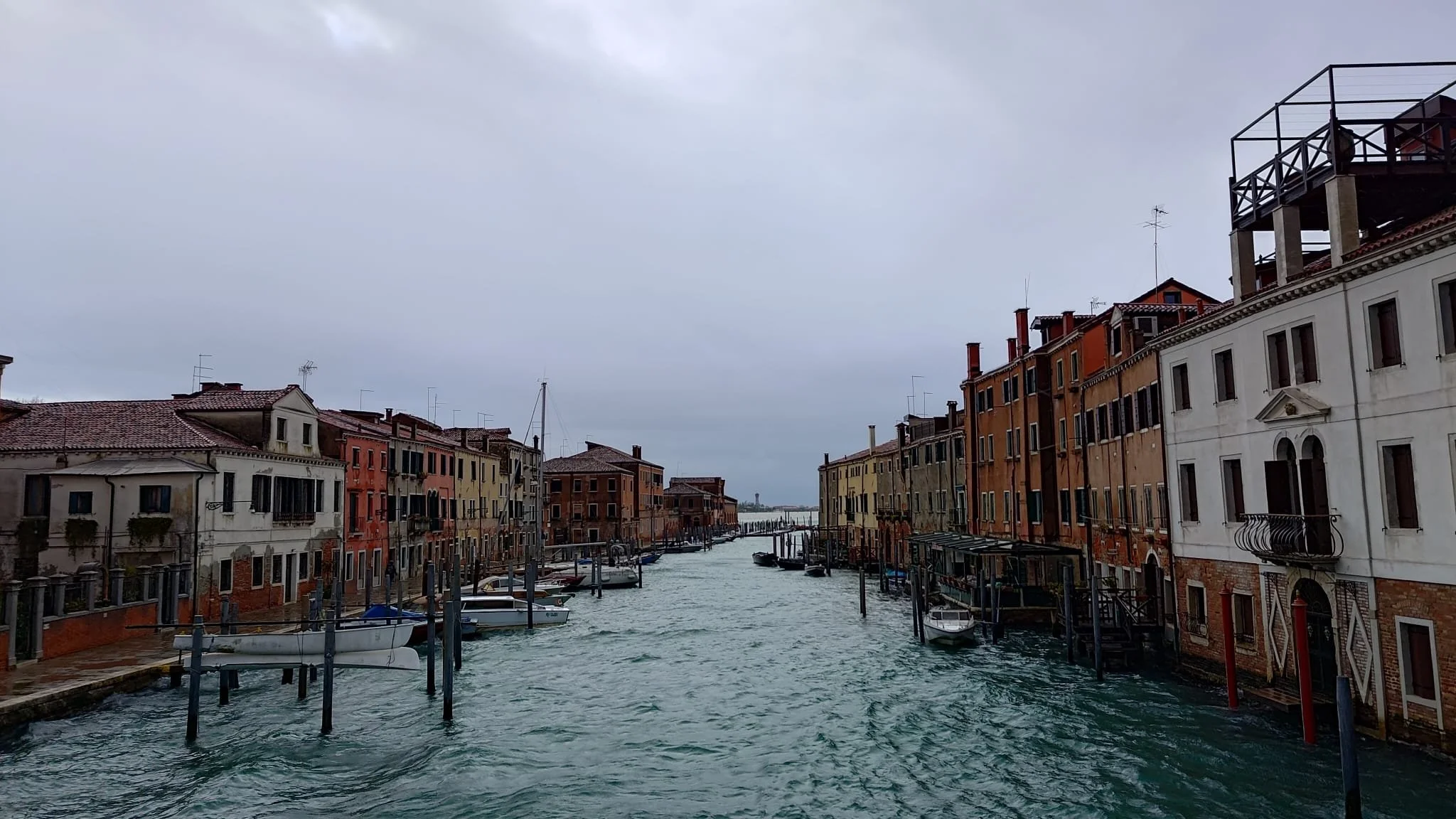
Venezia Canal
In March of 2018, we spent a month driving the length of Italy together. We had a rental car, a rough plan, and a month to ourselves — from Milan down through the Po Valley, over to the lagoons of Venice, along the Mediterranean to the Cinque Terre, into Tuscany, south through Rome and Naples, and finally to the Amalfi Coast. We also had a ring in the suitcase that one of us didn't know about yet.
At the end of the month, on a terrace above Positano, we got engaged.
Italy rewards slowness in a way few countries do. Meals that take three hours. Towns where the whole population comes outside at 6pm to walk and talk and watch the light go orange on old stone. Wine that comes from a field you can see from the table. We went slowly on purpose. We drove the long roads, stopped in towns nobody tells you to stop in, ate almost every meal where a local pointed us, and did our best to keep the biggest, most photographed places in proportion to the quieter ones.
Here's the trip, start to finish, and some thoughts on how to do this kind of journey without adding to the weight Italy is already carrying.
1. Franciacorta and Valdobbiadene — Wine Country Before Venice
We started in Milan, but we didn't linger. The real beginning of the trip was the wine country east of the city — two regions that feel like the quiet twin to the much louder Prosecco boom.
Franciacorta is Italy's answer to Champagne: méthode classique sparkling wines from Chardonnay and Pinot Nero, made in small volumes on hillsides south of Lake Iseo. It is, in our opinion, some of the best sparkling wine in the world — and because it hasn't been flooded with cheap supermarket exports the way Prosecco has, tasting rooms still feel like visiting someone's farm rather than checking in at an attraction.
Valdobbiadene, further east in the hills above Treviso, is the heart of true Prosecco country — the DOCG zone, where the best bottles come from. Not the stuff in plastic flutes at brunch. The real version: floral, light, mineral, from vines on nearly vertical hillsides. UNESCO recognized these hillsides as a World Heritage site in 2019, and walking them in spring is one of the most underrated things you can do in northern Italy.
Conscious-travel note: Choose small, family-run producers over the big commercial names. Book tastings directly (email ahead, not through a third-party platform). Buy a few bottles to take with you — it's one of the highest-value ways to carry the region home with you, and the money goes straight to the grower.
2. Venice — A City on the Edge
Venice is the city everyone warns you about and everyone still goes to. We went slowly, in March, in the shoulder season, and saw a Venice most day-trippers never get to see — the light soft on the stone, the canals quiet after 8pm, the fishmongers cleaning up at the Rialto market while we drank spritz at a table nearby. It's a different city when you give it time.
It's also a city we love, and a city we worry about. If you want to understand why conscious travel matters, Venice is maybe the clearest case study in the world.
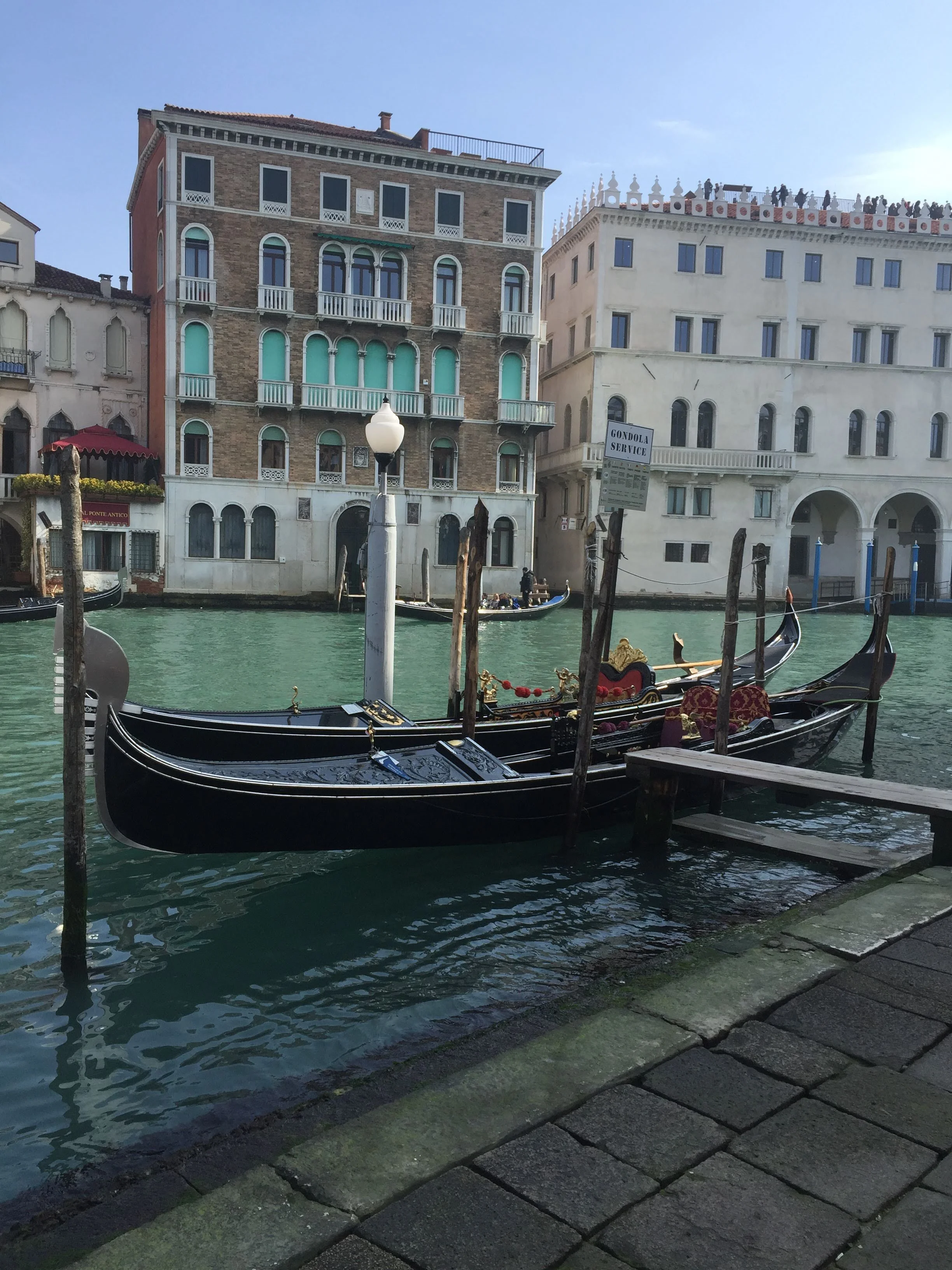
Gondola parked in Venezia
What mass tourism has actually done to Venice
In 1951, the historic center of Venice had 175,000 residents. Today, it has fewer than 48,000. That's a seventy percent collapse of the resident population in seventy years — an exodus unmatched in any other European city, and one that is still happening, roughly a thousand people leaving every year. A small activist group called Venessia.com has installed a digital counter in a pharmacy window near the Rialto that updates the number in real time.
Venice currently has more tourist beds than resident beds. Six out of ten apartments in the historic center are now registered as short-term tourist rentals. A landlord can earn more from a two-week tourist booking than from a month of rent from a Venetian family — so the math, for the landlord, isn't hard. For teachers, artisans, nurses, shop workers, and young families, the math is brutal: there's nowhere to live. The grocery store becomes a souvenir shop. The neighborhood bakery becomes a mask store. The primary school loses enough students that it closes. The child of the fisherman moves to Mestre, or Padua, or Milan, and his flat is rented out on Airbnb. Multiply by a thousand a year, for decades, and you get the Venice of today: a city increasingly inhabited by tourists rather than by Venetians.
Venessia.com describes what's left as "a city where residents feel like extras in someone else's movie." On peak days, tourists outnumber residents by as much as 400 to 1. The Venetian activist movement Mi no vado via — "I'm not going away" — has been protesting in the streets for years. In 2019, after long campaigns by residents, the city finally banned large cruise ships from entering the lagoon's historic basins. In 2024, it introduced a day-tripper access fee (€5, rising to €10 for last-minute bookings) on peak days — mostly to gather data and to nudge day-trippers toward staying overnight or not coming at all. Critics argue that these measures are too little, too late, and that without limits on short-term rentals the population collapse will continue.
We're not telling you not to go to Venice. We're telling you that how you go matters more here than almost anywhere else. A 30-minute cruise stop, a day-trip in from a nearby city, a gondola selfie at the Rialto, and a flight out — that's the model of tourism that has cost Venice its people. There is a different way to be there.
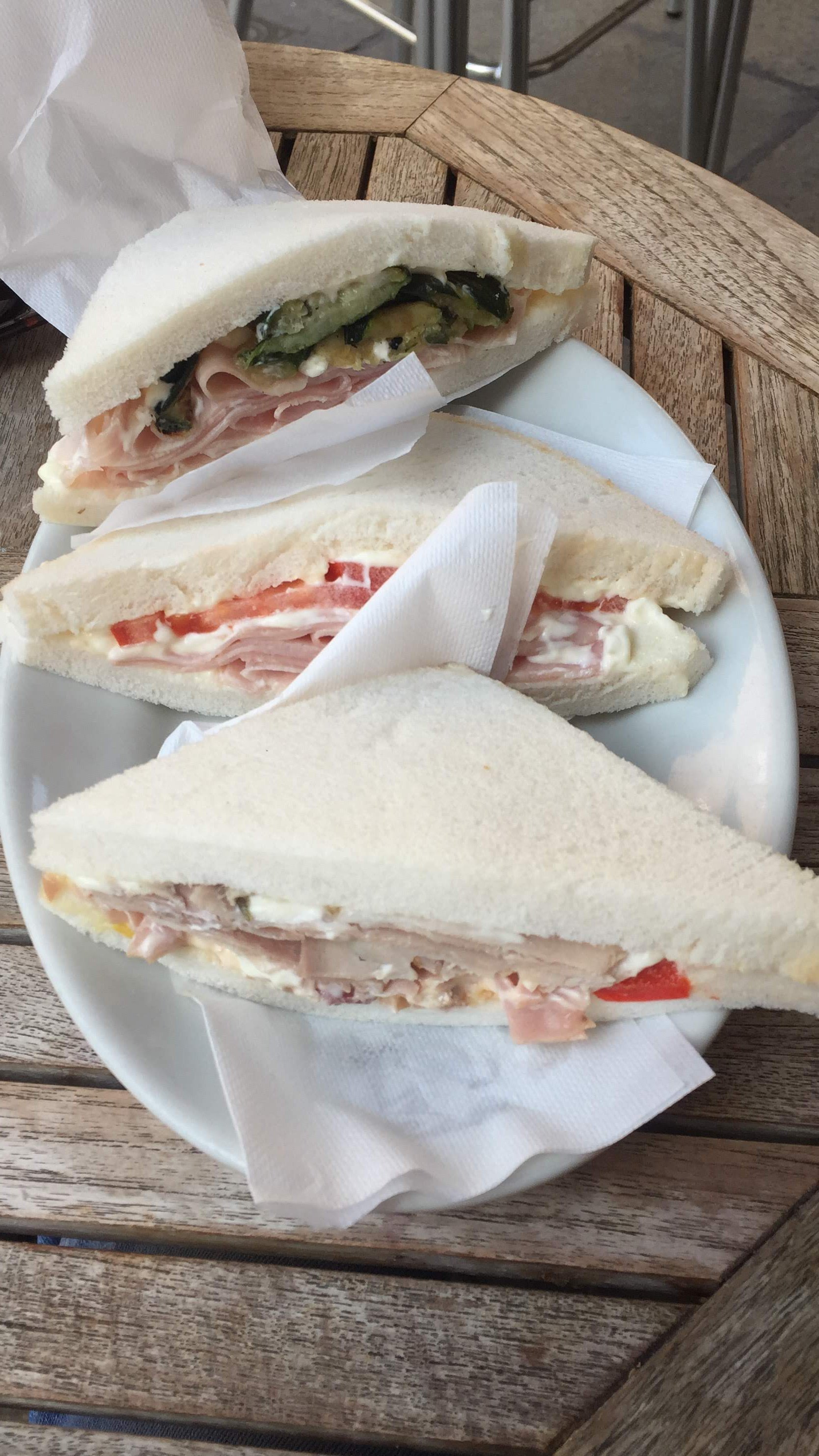
Tramezzini al bacaro
How we try to visit Venice well
Stay overnight, and stay several nights. The overnight visitor is Venice's preferred guest. Day-trippers spend little and leave quickly; overnight visitors spend more, spread out over the city, and actually see it at its best hours. Aim for three nights minimum. Better yet, four or five.
Stay in a legally registered rental from a local. Short-term rental oversupply is at the heart of the housing crisis. Booking through huge platforms worsens it; staying in a small, family-run pensione or at a B&B run by an actual Venetian puts your money into the hands of people who live in the city. When in doubt, ask your host whether they live in Venice. If the answer is yes, that's who you want to stay with.
Skip San Marco at peak hours. Go before breakfast or after dinner. Spend your actual daylight hours in Cannaregio, Dorsoduro, Castello, or the Jewish Quarter (Europe's oldest ghetto, and an extraordinary place). Walk away from the Rialto. Get lost on purpose.
Eat tramezzini at a real bacaro. Tramezzini are the soft white triangle sandwiches Venetians have been eating since the 1920s — ham and artichoke, tuna and egg, prosciutto and mozzarella — and they're the cheapest, fastest, most Venetian lunch you can have. A spritz and two tramezzini at the bar, leaning, like the locals. That's lunch.
Don't take a gondola. Sorry. They cost €90 for 30 minutes and the ride is almost entirely theater. The actual Venetian way to cross the Grand Canal where there's no bridge is the traghetto — a public ferry service run by the city, €2 for the crossing. You stand, you cross, locals commute alongside you, and the money supports public transport. Use the vaporetti (the city water-buses) for longer routes; they're the bus system Venetians actually depend on.
Buy from Venetian artisans, not souvenir shops. There's a difference between mass-produced masks and plastic gondolas imported from China, and actual Venetian craft — glasswork from Murano (ideally from a studio on Murano itself), handmade paper, traditional masks made by artisans who trained for years. Ask where something is made. If the shopkeeper can't tell you, move on.
Avoid Venice in peak summer. If you can, go in shoulder season — March, April, October, November. Winter is cold and often floods, but it's when the city is most itself.
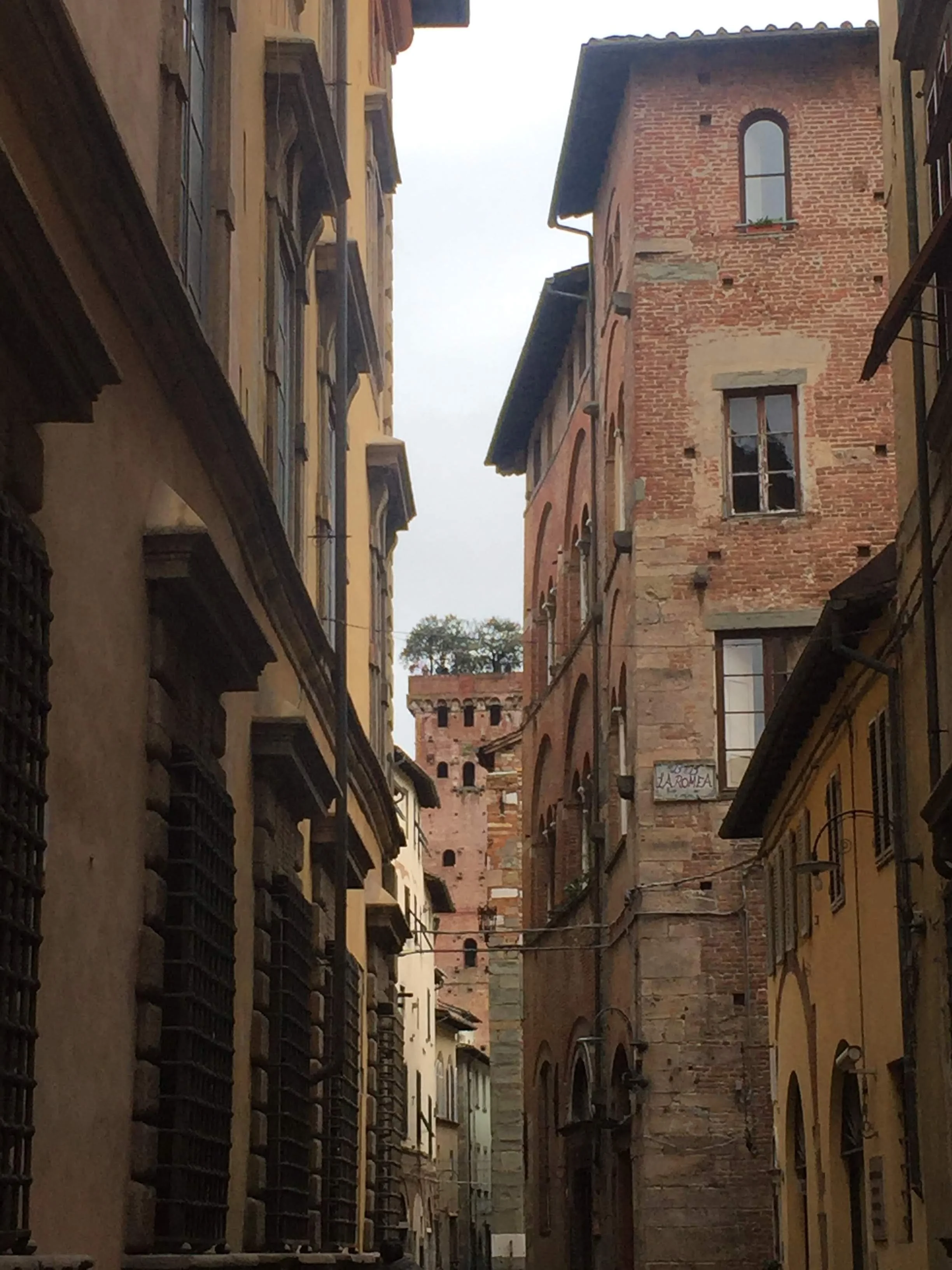
Lucca Torre Guinigi
3. Cinque Terre — Walk Between the Villages
We drove south and west across northern Italy to the Ligurian coast and the Cinque Terre — five tiny fishing villages built into cliffs above the Mediterranean, connected by trails and a train that runs through tunnels in the rock.
The Cinque Terre has its own overtourism issues (the footpaths have had to be partially closed in recent years due to erosion from sheer foot traffic), so we did what we always recommend: walk, and go early. The blue trail between the villages is the classic, and while parts of it are frequently closed for repairs, the alternative mountain routes are often better anyway — less crowded, more vineyards, occasionally a priest's dog following you from one village to the next. Start at dawn, have lunch in Vernazza, walk in the afternoon to Monterosso, take the last train back.
Go in shoulder season if you can. March and April are cool but uncrowded and the hillsides are full of wildflowers.
4. Lucca — Home
Lucca is home. It's where one of us grew up — where our parents still live, where the streets still remember us by name, where the light on the stone in the late afternoon has a specific quality you don't really understand you've been missing until you're back inside the walls.
This stop on the trip wasn't a stop. It was bringing the woman I love home to meet the city that made me. We stayed with my parents. We walked the streets I walked as a kid. We ate at the places my family has been eating at for decades — the same baker, the same butcher, the same bar in the corner of a piazza where the espresso is still €1 because the owner refuses on principle to charge tourist prices for it. Every summer now, we come back. Every summer Lucca gets a little more entwined with the story of us.
For anyone reading this who doesn't have the luck of having family here, a short introduction: Lucca is a complete walled medieval city in northern Tuscany, forty minutes from Florence and fifteen from Pisa. The walls are still standing, and still wide enough at the top to ride a bike around — a four-kilometer loop of oak trees and ramparts that feels more like a park in the sky than a fortification. Renting a bike and doing a lap of the walls is what everyone does, and for good reason.
Inside the walls: quiet stone streets, a circular piazza where there used to be a Roman amphitheater (Piazza dell'Anfiteatro — the houses are still curved around the old arena's footprint), a cathedral that doesn't get the tourist crush of Florence, the childhood home of the composer Giacomo Puccini, and the Torre Guinigi — a medieval tower with a small garden of oak trees growing on the roof. Local legend says the trees were planted there in the 1400s as a symbol of rebirth. They're still there, still alive, still improbable.
A few things we always do when we're home:
Walk the walls at dusk. The light over the Tuscan hills at sunset from the western edge is one of the things we love most in the world.
Piazza dell'Anfiteatro at breakfast, before the crowds. Coffee at one of the bars, watching the piazza wake up.
Puccini Festival in summer. Lucca is Puccini's hometown, and most summers there are open-air performances of his operas in the squares and churches. Catching La Bohème in Piazza San Michele, under stars, in Puccini's own city, is a thing.
Day trips out. Lucca is a great base. Pisa is fifteen minutes, the Garfagnana mountains are thirty, Viareggio and the Tuscan coast are forty.
Eat like a Lucchese. Lucca has its own food tradition, distinct from the rest of Tuscany — tordelli lucchesi (meat-stuffed pasta with ragù), farro soup, buccellato (a sweet ring bread with anise and raisins), and Lucca's extraordinary olive oil, which comes from the hills just outside the walls and is some of the best in Italy.
A note on conscious travel from the person who grew up here: Lucca is smaller and less famous than Florence, which has protected it — but Airbnb and short-term rentals are squeezing housing for locals here too, and the influx of day-trippers from the Pisa cruise port has accelerated in recent years. If you come, stay overnight (preferably at a B&B inside the walls, run by someone local). Buy olive oil and buccellato from the shops the old ladies shop at, not the souvenir ones. Learn a few words of Italian — Lucchesi are famously warm to people who try. And please, don't just come for an hour and a selfie on the walls. This is a city to sit in, not to tick off a list.
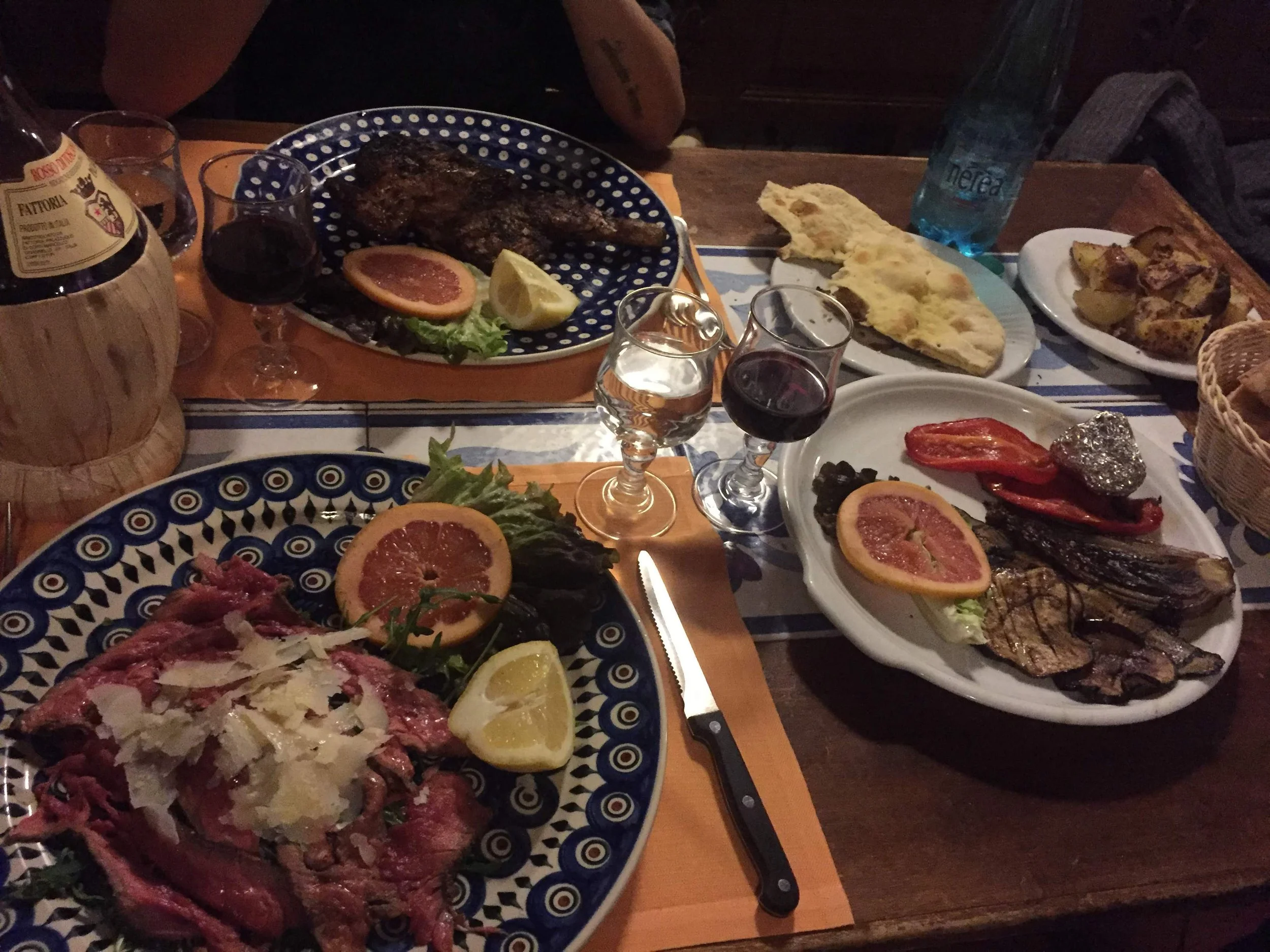
Bistecca alla fiorentina
5. Florence — La Bistecca
We won't spend long on Florence because you already know about Florence. The Uffizi is incredible, the Duomo is incredible, Ponte Vecchio at sunset is incredible, and all of it is well covered elsewhere.
What we will tell you is this: if you go to Florence, get the bistecca.
Bistecca alla Fiorentina is the Tuscan steak — a huge T-bone from Chianina cattle, grilled rare over wood, served sliced with a squeeze of lemon and coarse salt. This is the meal in the photo. We also ordered a carpaccio dressed with shaved parmigiano and arugula, a half-bottle of Tuscan red in a straw-covered fiasco, and grilled vegetables. We ate for about three hours, walked it off along the Arno, and agreed it was one of the best meals of our lives.
Where: skip anywhere that puts pictures of the food on the menu. The good places are on small streets off the tourist grid and often have a handwritten menu. Ask your airbnb host. Ask an older Italian waiter where they eat on their night off. Trust them.

Viewing spot in Rome
6. Rome — The Spots We Won't Share
We saw Rome from some of the most spectacular and least-crowded viewpoints in the city, and we're not going to share where they are. Part of conscious travel is knowing when a place is better protected by silence. Some of the best spots in the great tourist cities of the world are quiet because nobody writes about them, and that's how they stay quiet. If you go to Rome and find your own hidden viewpoints, we'd suggest the same: keep them to yourself, or share them only with the people you love most.
What we will share: walk Rome instead of driving it, eat dinner at 9pm like the Romans do, spend an entire morning in Trastevere, and go to at least one neighborhood trattoria where the menu is in Italian only and the tablecloths are paper. Rome rewards people who stop performing tourism and just live there for a few days.
7. Naples — Stopped in the Shadow of Vesuvius
We stopped in Naples on the way south — not long, just a night and a day — and ate pizza. Obviously. The pizza Margherita was invented here in 1889, and you can still eat it at the places where it was born (Da Michele, Sorbillo, Di Matteo, Starita). The dough is pillowy and lightly charred, the tomatoes are San Marzano from the slopes of the volcano you can see from the waterfront, the mozzarella is fresh.
Naples also has the reputation of being rough, loud, and overwhelming — and it is all of those things — but we loved it. The waterfront, the view of Vesuvius, the old city streets that feel more like Beirut or Cairo than the Italy most visitors imagine — it's real, it's unfiltered, and it's full of people actually living their lives. We'll be back.
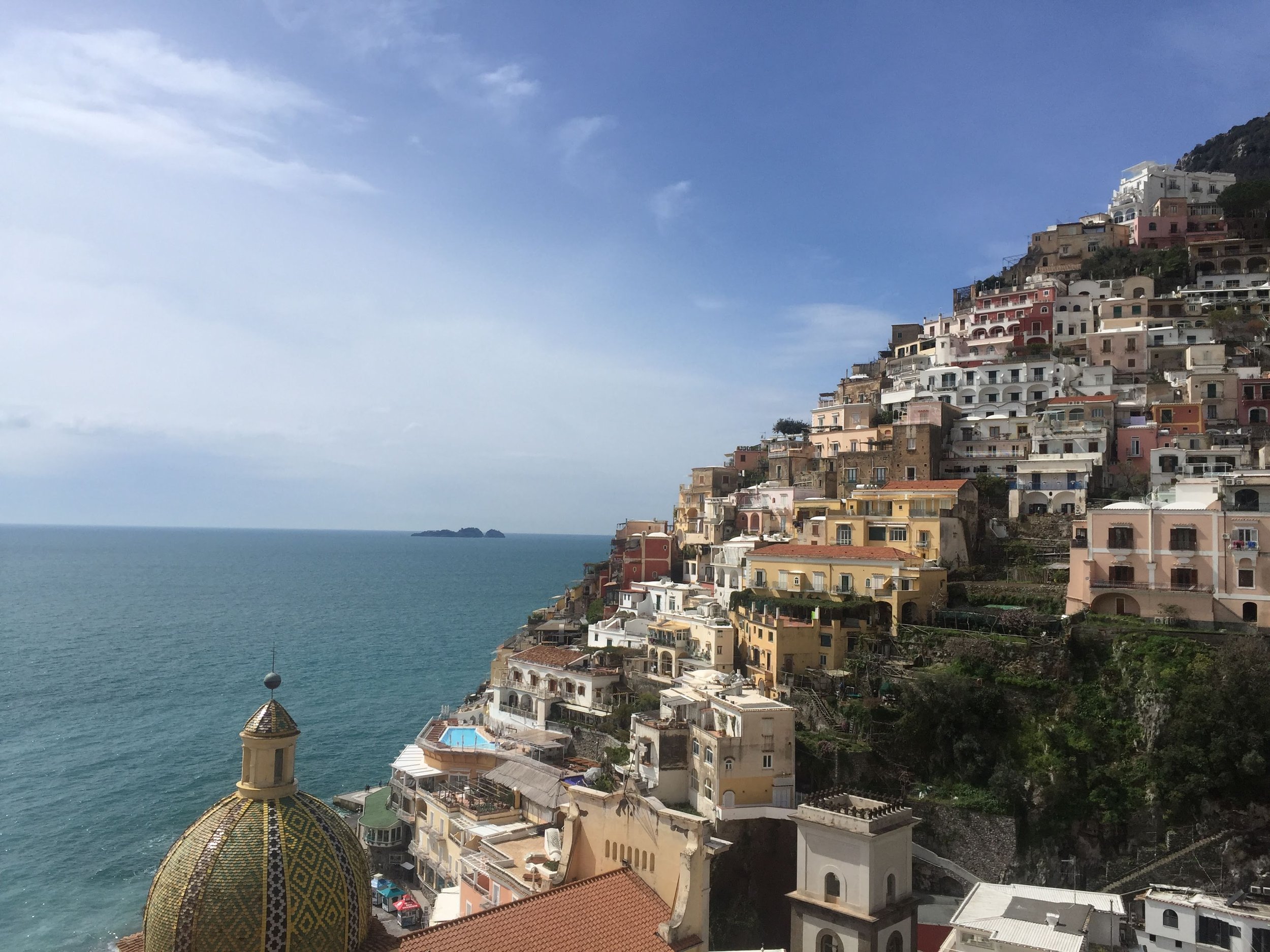
Positano
8. Amalfi Coast — Positano and Le Sirenuse
Positano is a town stacked vertically into a cliff, painted every color of the Mediterranean, all built around a single winding road and a thousand stairs. It's one of the most photographed places in Italy and, depending on when you go, one of the most crowded — but in March, in the shoulder season, it was quiet. We had the stairs mostly to ourselves. The shops were just reopening for the season. The water was too cold to swim in but exactly the right color to look at.
We got engaged on a terrace at Le Sirenuse, the pink hotel in the middle of Positano, family-run since 1951. The ring came out. The rehearsed words disappeared. The yes came before the question had finished landing. We drank champagne on the terrace, couldn't stop looking at the ring, couldn't stop looking at each other. The hotel staff clapped. The sun dropped into the Mediterranean. A few minutes later a friend took a polaroid of us wearing the silly bride-to-be sunglasses we'd bought as a joke at some point on the trip. It wasn't a joke anymore.
A few things to know about the Amalfi Coast if you're going:
Go in March, April, or October. Peak summer is when this coast becomes untenable — for visitors, and more importantly for the people who live here and have to navigate their own towns.
Skip the rental car along the coast itself. The SS163 is famously narrow, there's nowhere to park, and the SITA bus is cheap, reliable, and lets you actually look at the view. If you must drive, park at a hotel with its own spot and don't move the car for days.
Stay in one town, not several. Amalfi Coast hotels are not cheap, and the temptation is to rush between Positano, Amalfi, and Ravello. Don't. Pick one, stay at least three nights, and walk.
Eat at family-run places. The Amalfi Coast has a long tradition of family restaurants serving what they caught or grew that morning — scialatielli ai frutti di mare, scialatielli with clams, fresh lemon granita made from the lemons that grow on every terrace. These places outlast the fashion restaurants for a reason.
Italy is the most visited country in Europe after Spain and France. Most of its famous cities are, by now, fighting to remain livable for the people who built them. The conscious version of this trip isn't to avoid Italy — it's to go slowly, to stay overnight in the places you visit, to walk, to eat where Italians eat, to spend your money with families instead of chains, and to treat Italian towns as what they are: places where people have been living for centuries, not backdrops for photos.
One month felt short. We made it last by refusing to rush through it. We stopped when the light was good. We ate three-hour lunches in places where we didn't speak English. We took the slow train more than once on purpose. We asked for recommendations from older people, never younger ones (the older ones still know which restaurant is run by which family).
And at the end of it, on a cliff in Positano, we said yes to each other. We walked back down the stairs to Le Sirenuse, ordered another glass of champagne, and watched the sun drop into the Mediterranean. Married now, years later, still traveling together — slowly, consciously, hand in hand.
Travel further. Eat like a local. Leave the lightest imprint you can.
