
Five Months in Tenerife: Doing the Canaries Consciously
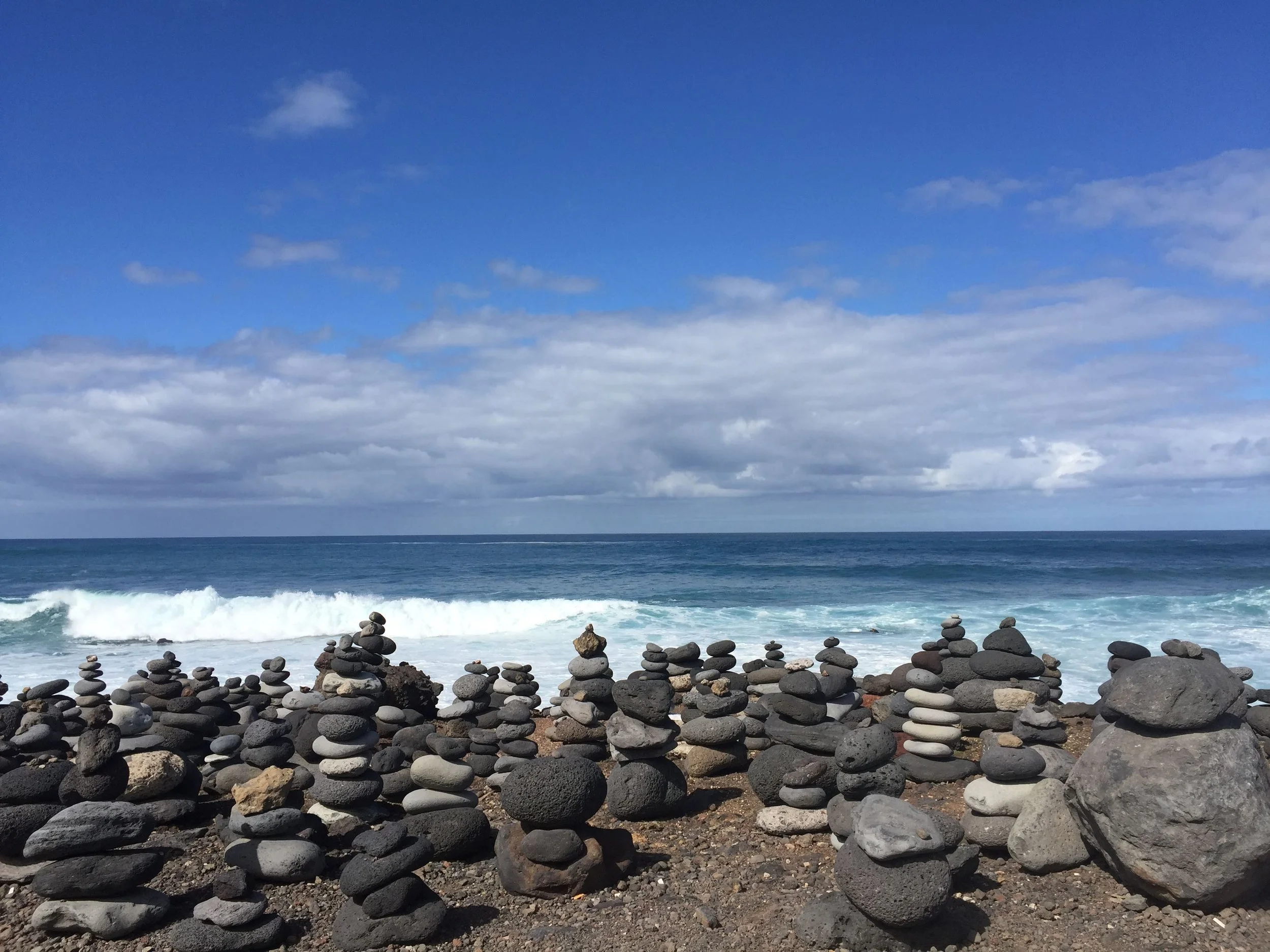
Puerto de la Cruz Ritual Beach
In 2018 we lived in Tenerife for five months. Not a holiday — actual living. We rented a small place in Puerto de la Cruz on the north coast, woke up to the Atlantic most mornings, and spent our days walking. A lot. We walked 50 and 60 kilometers at a time to nearby towns, up through the hills, down through banana plantations, along cliff paths that drop straight into black-sand coves. It was the slowest we’ve lived in a long time, and Tenerife gave us more than we expected.
It also taught us something we’ve been thinking about ever since: that there are essentially two Tenerifes.
There’s the one built for British package tourists — concentrated in the south around Playa de las Américas and Costa Adeje — where entire resort complexes exist in a bubble of English pubs, all-inclusive buffets, and full-English breakfasts. And then there’s the other Tenerife, mostly in the north and the interior, where people speak Spanish, eat Canarian food, and have been living on this island for centuries. The gap between these two versions of the island is enormous, and a lot of Canarians are genuinely fed up with it. In recent years, tens of thousands of residents marched in the streets under the slogan "Canarias tiene un límite" — "the Canary Islands have a limit" — protesting the way mass tourism has priced them out of housing, strained water resources, and eroded the culture they actually live in.
So this post isn’t a list of sights. It’s about how to visit Tenerife without being part of the problem — and how to experience the actual island along the way.
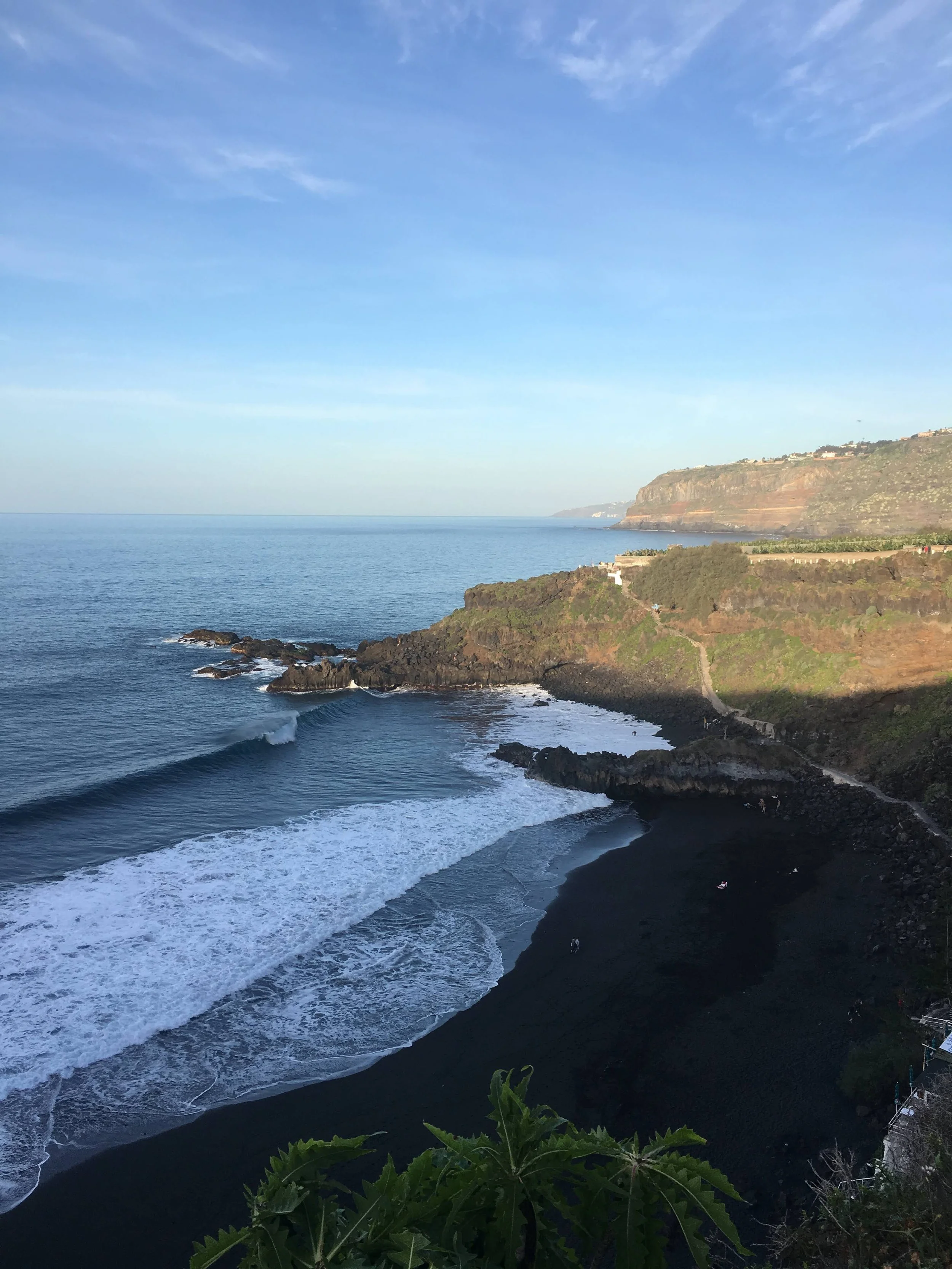
View from La Orotava
Base Yourself in the North, Not the South
The single biggest choice you’ll make as a conscious traveler in Tenerife is where you sleep. The south — Los Cristianos, Playa de las Américas, Costa Adeje — is where most of the package tourism money goes. Entire neighborhoods exist in English, staffed by seasonal workers, catering to a steady rotation of visitors who, in many cases, never really engage with the fact that they’re in Spain at all. This is the tourism model locals are protesting against, not the concept of tourism itself.
The north is different. Puerto de la Cruz is the island’s oldest resort town — it’s been receiving visitors for over a century — but it’s still a real Canarian town where locals live, shop, and raise families alongside visitors. The plazas fill up with older Canarians chatting in the evening. The fish market runs on the schedule of the fishing boats. The bakeries speak Spanish. La Orotava, just inland, is one of the most beautiful historical towns in the Canaries. Icod de los Vinos has a 1,000-year-old dragon tree. The whole north coast is greener, wilder, and less paved over.
Our recommendation is simple: stay in Puerto de la Cruz, La Orotava, Garachico, or one of the smaller northern villages. Rent from a local rather than a chain hotel if you can. You’ll pay less, eat better, and your money will actually reach the island’s residents.
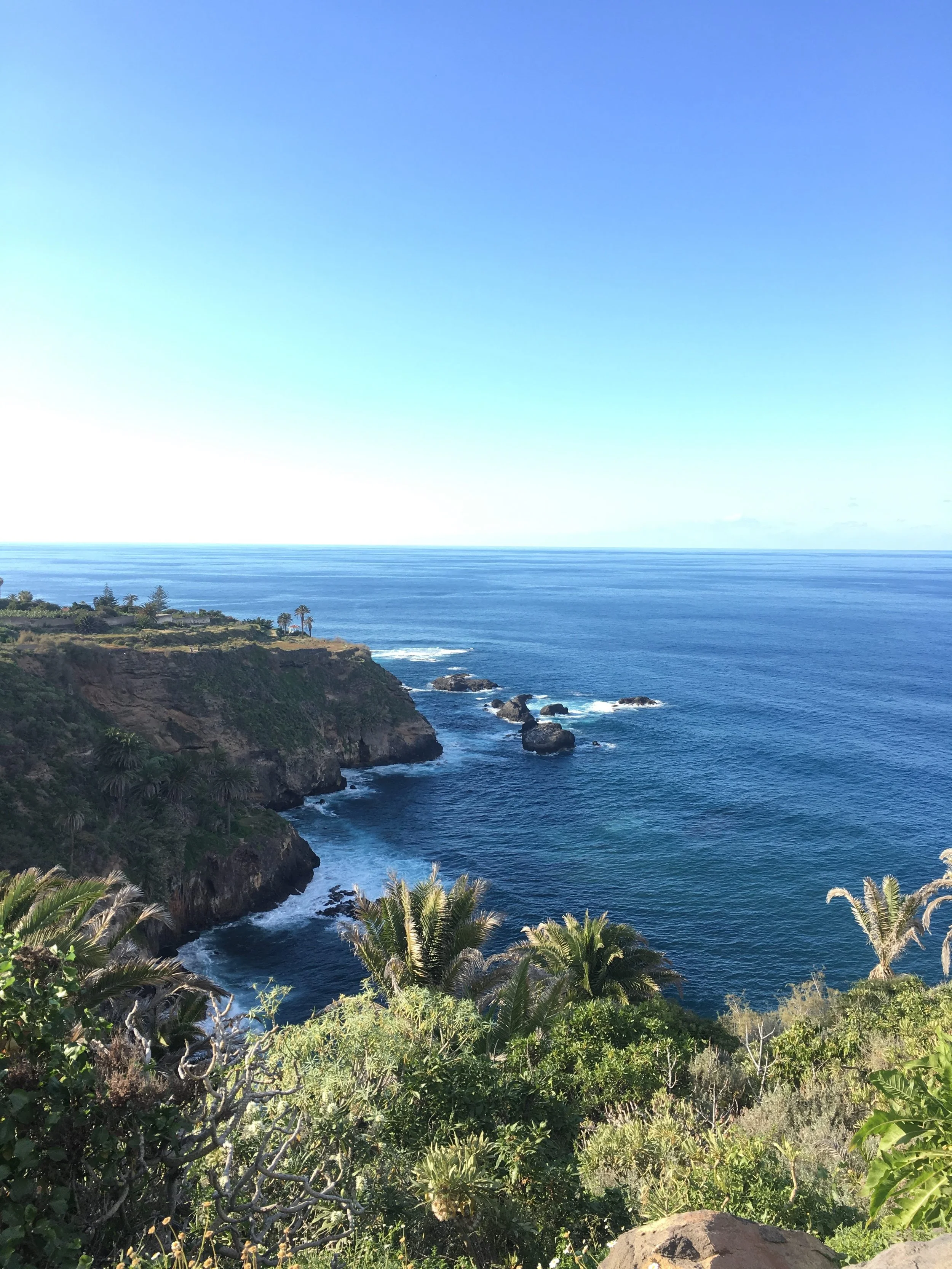
Los Realejos
Walk, Don’t Drive (Where You Can)
Tenerife is a small island. Most places are walkable with enough time, and the walking is some of the best we’ve ever done anywhere. Over those five months, we walked to nearly every town within a reasonable distance of Puerto de la Cruz — some days covering 50 or 60 kilometers between sunrise and sunset, through terrain that changes so fast you almost don’t believe it’s the same island.
A few of our favorite walks:
Puerto de la Cruz → El Bollullo (about 45 minutes each way, easy/moderate). This is the classic. A cliff path east out of town takes you through working banana plantations and drops down to a stunning black-sand beach at the base of a 100-meter cliff. There’s a small chiringuito at the top for a cold drink before the walk back. The waves at El Bollullo are powerful and swimming can be risky — pay attention to the red flags.
Puerto de la Cruz → La Orotava (about 5 km uphill, moderate). A beautiful climb inland through the banana fields into one of the most preserved historical towns in Spain. La Orotava is full of 17th-century Canarian balconies, wooden mansions, and the Iglesia de la Concepción, and it’s still very much a living town, not a museum.
The TF-21 road toward El Teide isn’t really walkable, but the stretches above Aguamansa — through laurel forest and old drover’s paths — are some of the best hiking on the island.
Los Realejos coastal path — a quieter alternative to the El Bollullo route, with cliff views and far fewer people.
Walking also lets you see the parts of Tenerife that exist between the towns — tiny farms, roadside fincas selling their own wine, old church squares where nobody is performing for tourists. That’s where the island actually lives.
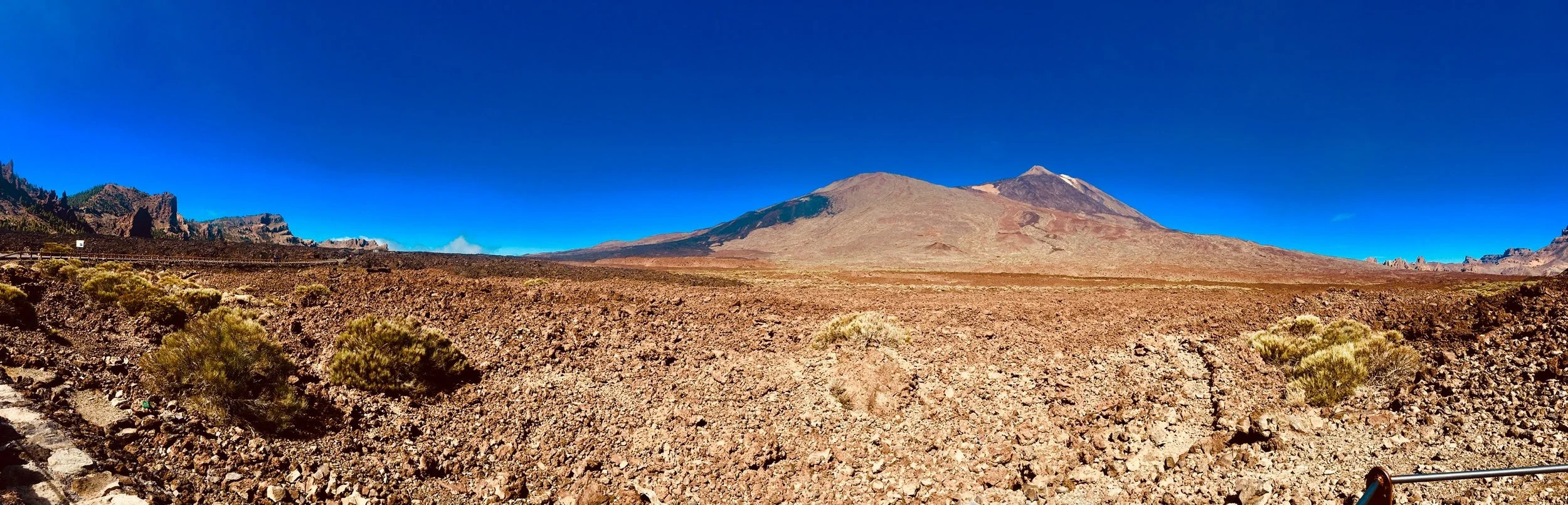
El Teide Basecamp
Go Up to El Teide
Location: Teide National Park, central Tenerife
Overall Experience: 10/10
At 3,715 meters, El Teide is the highest peak in Spain and the third-largest volcano in the world by volume from its oceanic base. The Cañadas del Teide — the vast volcanic caldera around it — is one of the most otherworldly landscapes in Europe. Red-black lava fields. Twisted rock formations. Complete silence above the cloud line on most days.
If you can, skip the cable car and hike up one of the trails instead. The cable car line is long, the tops of the trails are crowded with people who arrived without having earned the view, and the trail experience is infinitely better. If you want to summit (to the actual peak, above the cable car station), you need a free permit from the park authority — book it weeks in advance. The sunrise hike from Altavista Refuge is one of the great experiences on the island.
Whatever you do, don’t fly a drone, don’t step off the marked trails (the volcanic substrate takes decades to recover from a single footprint), and don’t leave anything behind. This is a UNESCO World Heritage site and a fragile ecosystem.
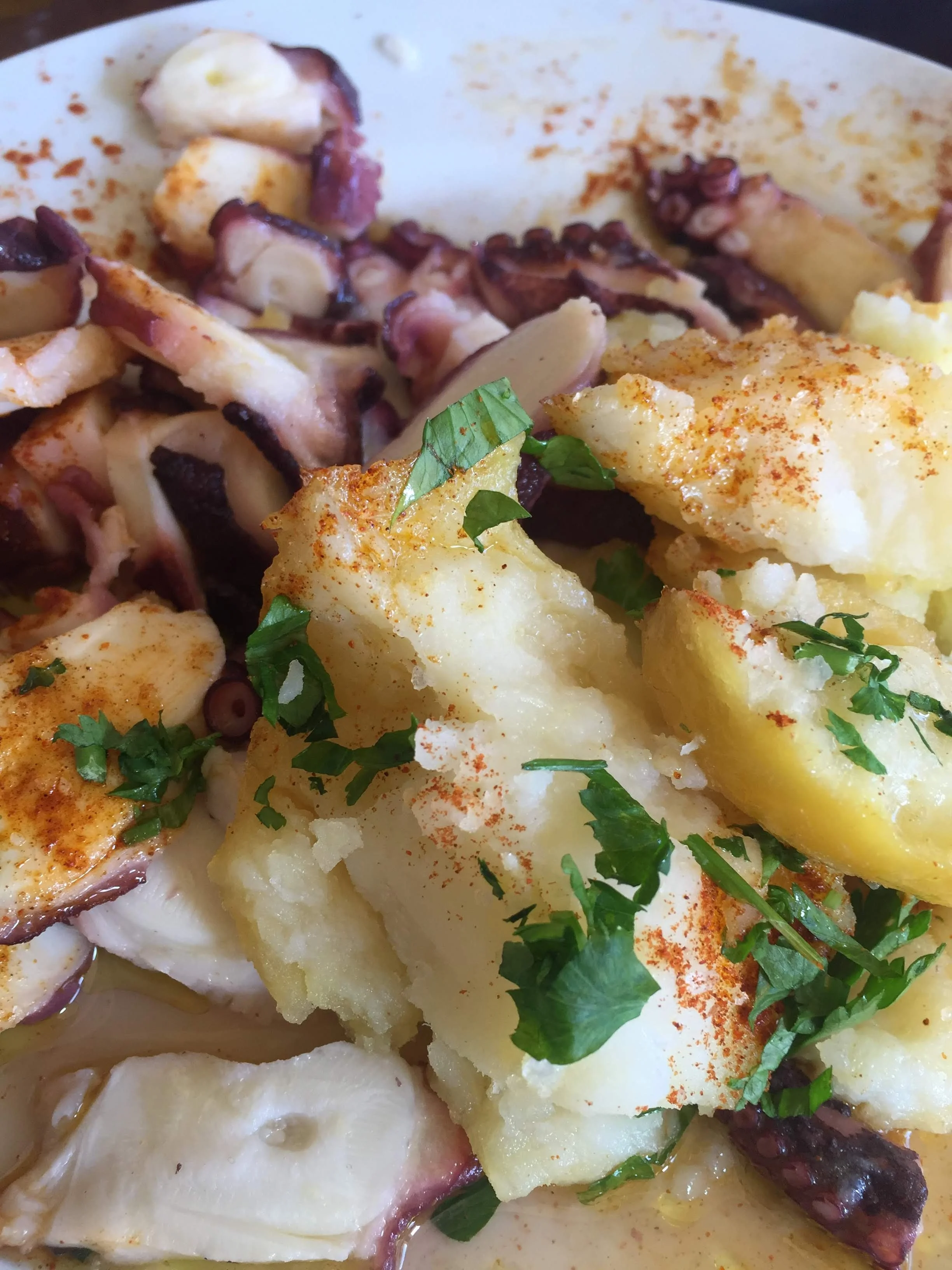
Pulpo a la gallega
Eat Canarian Food, at Canarian Restaurants
Region: El Sauzal and the northern wine country
Overall Experience: 10/10
One of the best meals we had on the entire island was a plate of pulpo a la gallega — Galician-style octopus with boiled potatoes, good olive oil, flaky salt, and a heavy dusting of smoked pimentón — at a tiny guachinche in El Sauzal, on the hillside above the north coast.
If you’ve never heard of a guachinche: it’s a uniquely Canarian institution, specifically Tenerifeño. Traditionally, they’re small family-run spots on the premises of a local vineyard, open for only part of the year, serving whatever the family has cooked that day alongside the wine they make themselves. The menu is tiny, usually handwritten on a chalkboard, and the prices are half what you’d pay in a restaurant. The wine comes in a jug.
Skip the English pubs. Skip the chain restaurants with pictures of the food on the menu. Skip anywhere that’s advertising "full English breakfast." Find a guachinche instead. A few dishes to look for:
Papas arrugadas con mojo — small wrinkled potatoes boiled in heavily salted water, served with red mojo picón (paprika and chile) and green mojo verde (cilantro and garlic). The most iconic Canarian dish.
Pulpo a la gallega — boiled octopus, potatoes, pimentón, olive oil.
Queso asado con mojo — grilled Canarian goat cheese.
Carne fiesta — pork marinated in garlic, wine, and spices, fried.
Ropa vieja canaria — slow-cooked meat with chickpeas (different from the Cuban version).
Vino del país — Tenerife makes excellent volcanic wines, especially the whites from the north, which you won’t find outside the islands.
The food on this island is genuinely regional and genuinely good. The experience of a guachinche is as close as you’ll come to being invited into someone’s home.
We lived in Tenerife long enough to watch it without our tourist eyes on. We also lived there long enough to feel the friction — the way some visitors from the UK in particular seemed to treat the island as an extension of Blackpool, drinking loudly, complaining about Spanish service, mocking the language, acting as if the locals existed to serve their holiday. It was hard to watch. It made us understand instantly why Canarians have taken to the streets.
None of this means you shouldn’t visit Tenerife. You absolutely should. But come knowing that you’re a guest, not a customer. Learn a few words of Spanish (Canarians will meet you with genuine warmth if you try). Stay in the north. Walk more than you drive. Eat at guachinches. Pay the eco-tax. Buy from local artisans. And please — please — don’t treat this place like a theme park.
Travel further. Respect the land and the people. Leave the lightest imprint you can.
