
Isola d'Elba: The Tuscan Island Italians Keep to Themselves
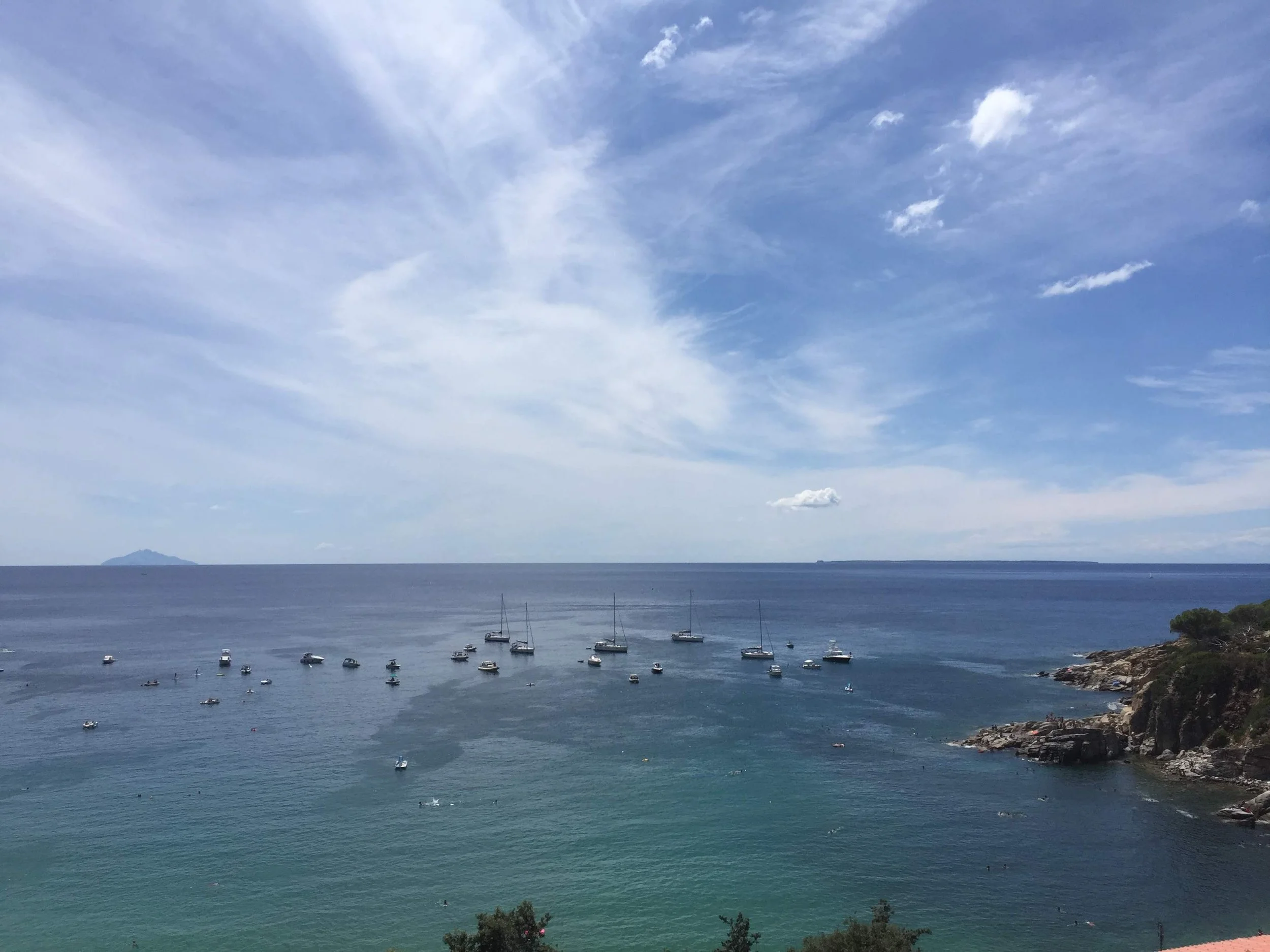
Isola d’Elba
If you grew up in Lucca, like one of us did, you grew up going to Elba. It's the island Tuscans disappear to in summer — an hour's ferry from Piombino, a ninety-minute drive down the coast from our family home — and for almost every Lucchese family we know, it's where the real Italian summer happens.
It's also the island most people outside Italy have never heard of. Ask an international traveler about Tuscan islands and they'll say Capri (not Tuscan) or Ponza (also not). Elba is the third largest island in Italy after Sicily and Sardinia, and it still flies under the radar of foreign tourism. That's exactly what makes it so good. The beaches fill up with Italian families, the restaurants are run by people whose grandparents ran them, and most of the conversations around you are in Italian because most of the people are.
We go back every summer. Here's how we spend it.
Getting There
You take the ferry from Piombino, a port on the Tuscan coast about 80 km south of Livorno. The crossing to Portoferraio, the main town, takes 45 minutes to an hour. Three companies run the route (Moby, Toremar, Blu Navy); tickets start around €18. Take your car on the ferry — Elba is big enough that you want wheels to explore it properly. In July and August, book your vehicle space weeks in advance. It sells out.
From Pisa or Florence, Piombino is under two hours by car or train. From Lucca, ninety minutes. The ferry itself is half the experience: the slow approach to the island, the fortified walls of Portoferraio rising up as you get closer, the gulls and the espresso on the top deck.
Cavoli — Our Beach
Cavoli sits on the southwestern coast, sheltered from the northern winds by Monte Capanne behind it. The microclimate means the water stays swimmable even when it's rough everywhere else. The sand is pale gold, the water is the color of a swimming pool but warmer, and on a clear day you can see two of the smaller islands of the Tuscan archipelago from the shore — Pianosa and Montecristo. Yes, that Montecristo. Dumas didn't invent it.
A few things we've learned over the years:
Park up top and walk down. There's a small paid lot at the top of the hill, then a staircase to the beach. In August, arrive before 11am or the lot is full.
Go west for quiet, east for music. The western half is mellower; the eastern half in July and August turns into a long beach-club afternoon.
Watch the wind. When the scirocco (southern wind) blows, locals go north (Sansone, Biodola). When the wind is from the north, come here. Everyone on the island picks their beach by checking the wind in the morning.
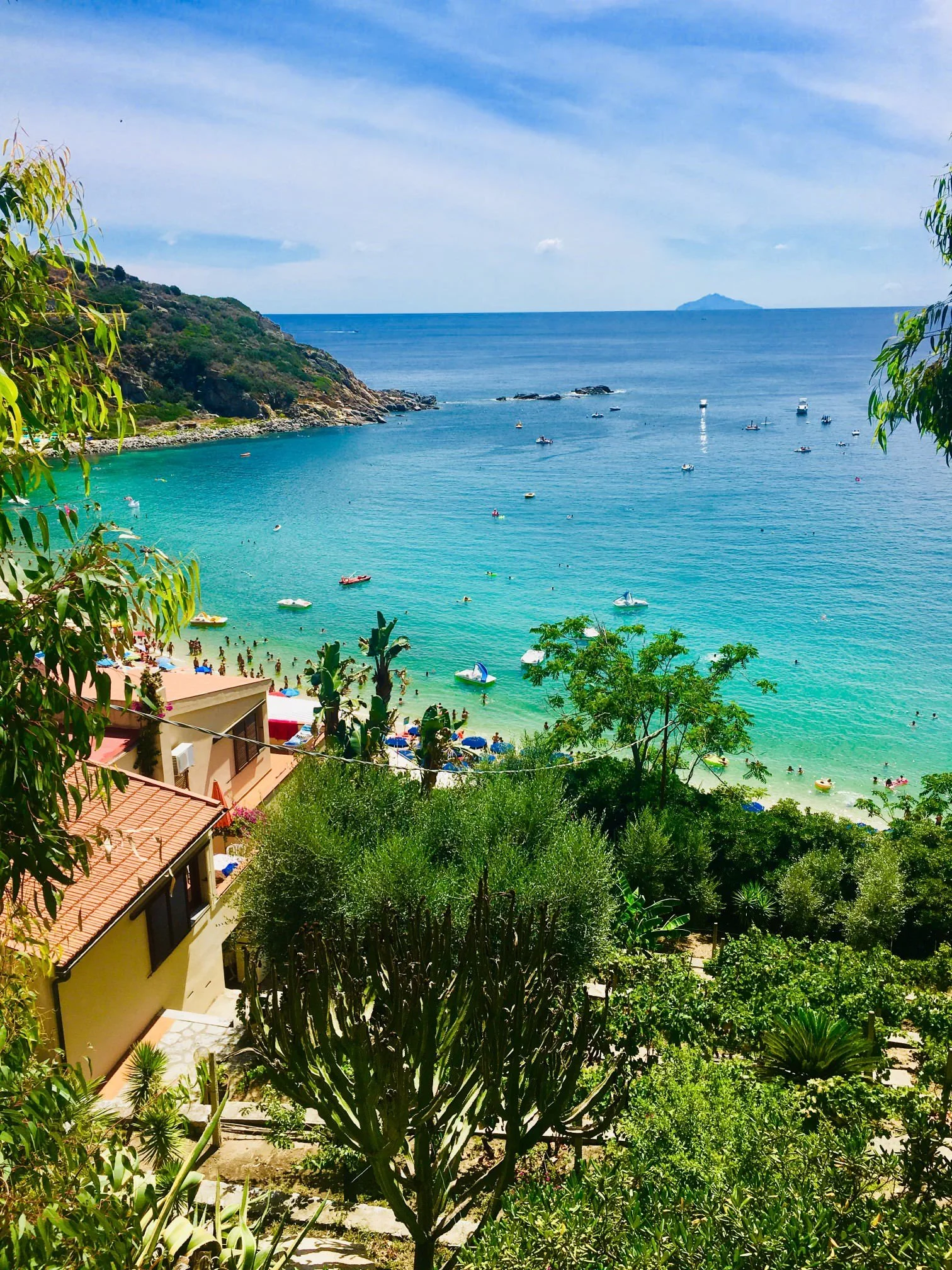
Cavolil
Beyond Cavoli
Elba has over 100 beaches along 147 km of coastline. A few more of our favorites:
Fetovaia — just west of Cavoli, another south-coast beach with golden sand and a deep cove. Arguably the most photogenic on the island.
Sansone — white pebbles, turquoise water, and cliffs, near Portoferraio. Looks less like Italy than like the Caribbean. Bring water shoes.
Innamorata — on the southeast coast near Capoliveri. A wild beach with a romantic legend attached, next to an abandoned iron mine.
Terranera — a black-sand beach next to a small emerald lagoon formed by old mining works. Photogenic and very Elba.
Portoferraio, Capoliveri, and the Interior
Portoferraio is the capital, a fortified Medici town built by Cosimo I in the 16th century. The old town climbs the hillside in ochre and salmon behind the walls of Forte Falcone and Forte Stella. Napoleon was exiled here for nine months in 1814–15; you can visit both of his residences, Villa dei Mulini in town and Villa San Martino in the hills.
Capoliveri, on the southeastern tip, is our favorite town on the island — a medieval village on a hilltop, narrow stone streets, small restaurants, and a buzzing evening passeggiata. Eat dinner here.
The interior of Elba surprises everyone: dense chestnut forests, hilltop hermitages, and Monte Capanne at 1,019 meters, which you can summit on foot or by an open-basket chairlift from Marciana. From the top, on a clear day, you can see Corsica.
A Conscious-Travel Note
Elba is relatively protected for three reasons: no direct international flights, a limited ferry capacity, and a summer season dominated by Italian families who have been coming for generations. Those three things have held mass tourism at bay. But the pressure is coming — Airbnb penetration on the island has grown fast, and August crowds now regularly exceed the capacity of the main beaches.
How to visit well:
Avoid August if you can. Late May, June, and September are the real Elba — warm sea, fewer crowds, much better parking. August is Ferragosto chaos.
Rent from a local. Small family-run hotels, agriturismi, and B&Bs are still the backbone of the island's accommodation. Villa rentals direct from Elban owners are easy to find. Skip the big international platforms where possible.
Eat local. Elba has its own food tradition — schiaccia briaca (a spiced raisin-and-nut cake), sburrita (a salt-cod soup with wild mint), and excellent wines including the sweet red Aleatico Passito. Small wineries like La Chiusa and Arrighi are worth a visit.
Day-trip to Pianosa. The small island offshore from Elba is a marine protected area — fishing and anchoring are banned, and only 250 visitors per day are allowed, on guided excursions only. Book ahead from Portoferraio. It's one of the most pristine underwater ecosystems in the Mediterranean.
Leave it cleaner than you found it. Elban beaches are delicate. Pack it out. Reef-safe sunscreen. The usual, said with feeling.
Elba is the kind of place that rewards coming back. Every summer we go and every summer we find a new cove, a new trattoria, a new hiking path through the chestnut forests. It isn't flashy. It doesn't trend on Instagram. It's an island of Italian families, summer-long slowness, and some of the clearest water in the Mediterranean — a quiet, lived-in counterpoint to the postcard Italy most visitors chase.
If you do come, come for a week, not a weekend. Rent somewhere with a kitchen. Shop at the morning markets. Eat dinner at 9pm. Swim twice a day. And watch the wind.
Travel further. Eat like a local. Leave the lightest imprint you can.
