
The Long Way to Ensenada: A Slow Road Through Baja California
From 2017 to 2020 we drove the Baja coast a few times from Long Beach down through Rosarito, Puerto Nuevo, Ensenada, and the Valle de Guadalupe wine country. The Pacific is on your right for most of the drive. And the food — from roadside lobster in fishing villages to octopus pulled out of the water that morning — is some of the freshest you’d find.
There’s a whole version of Baja built for cruise passengers and day-trippers — chain bars, party boats, tour operators shuttling hundreds of people through the same three stops. We skipped all of that. What we’re sharing here are the places where you meet the actual people who live and work on this coast: a community-built landmark, a fishing village that still runs on its own rhythm, a working seafood market, and a wine valley full of small family producers. Four stops, no tours, no shortcuts.
1. Cristo del Sagrado Corazón
Location: El Morro, about 6 miles south of Rosarito (off Carretera Libre KM 37)
Overall Experience: 8/10
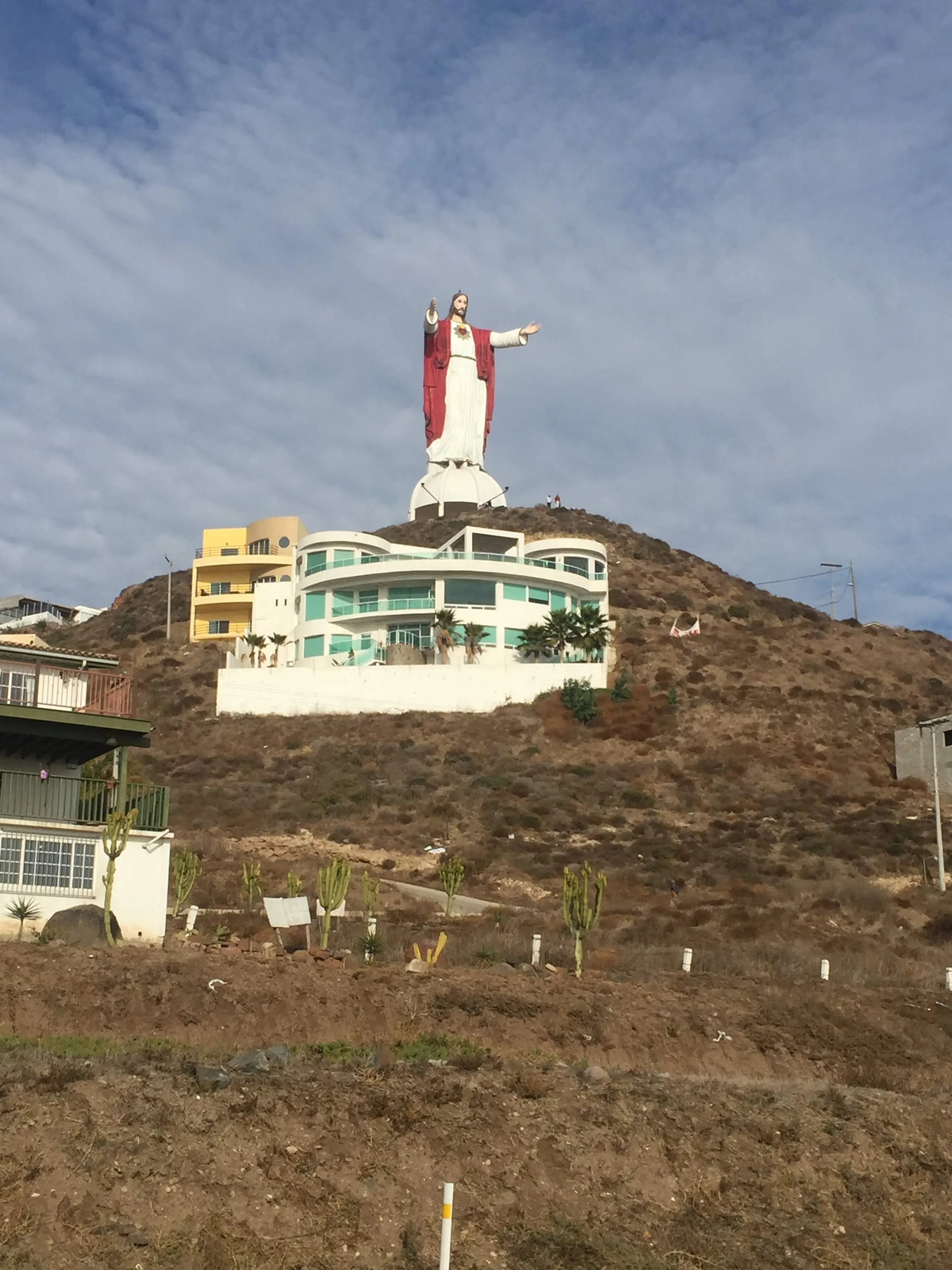
Cristo del Sagrado Corazón view
About thirty minutes south of the border, a 75-foot statue of Jesus comes into view on a hill overlooking the Pacific. This is the Cristo del Sagrado Corazón — the only large statue of Jesus in the world in full color — and it’s almost impossible to miss once you know to look for it.
The story behind it is what makes this stop feel right for conscious travelers. It wasn’t built for tourists or commissioned by a business. It was paid for by a local man named Antonio Pequeño Guerrero, who grew up in Rosarito so poor he didn’t own a pair of shoes until he was twelve. When his life turned and he had something to give back, he funded this statue as a gift to the community. "This is not for me," he said at the unveiling in 2006. "This is for everyone." He passed away shortly after.
You can drive right up to the base. There’s no admission fee, no shop, no guided tour, no one trying to sell you anything. Just the statue, the ocean, and whatever you brought with you. If you’re heading south, make this your first stop.
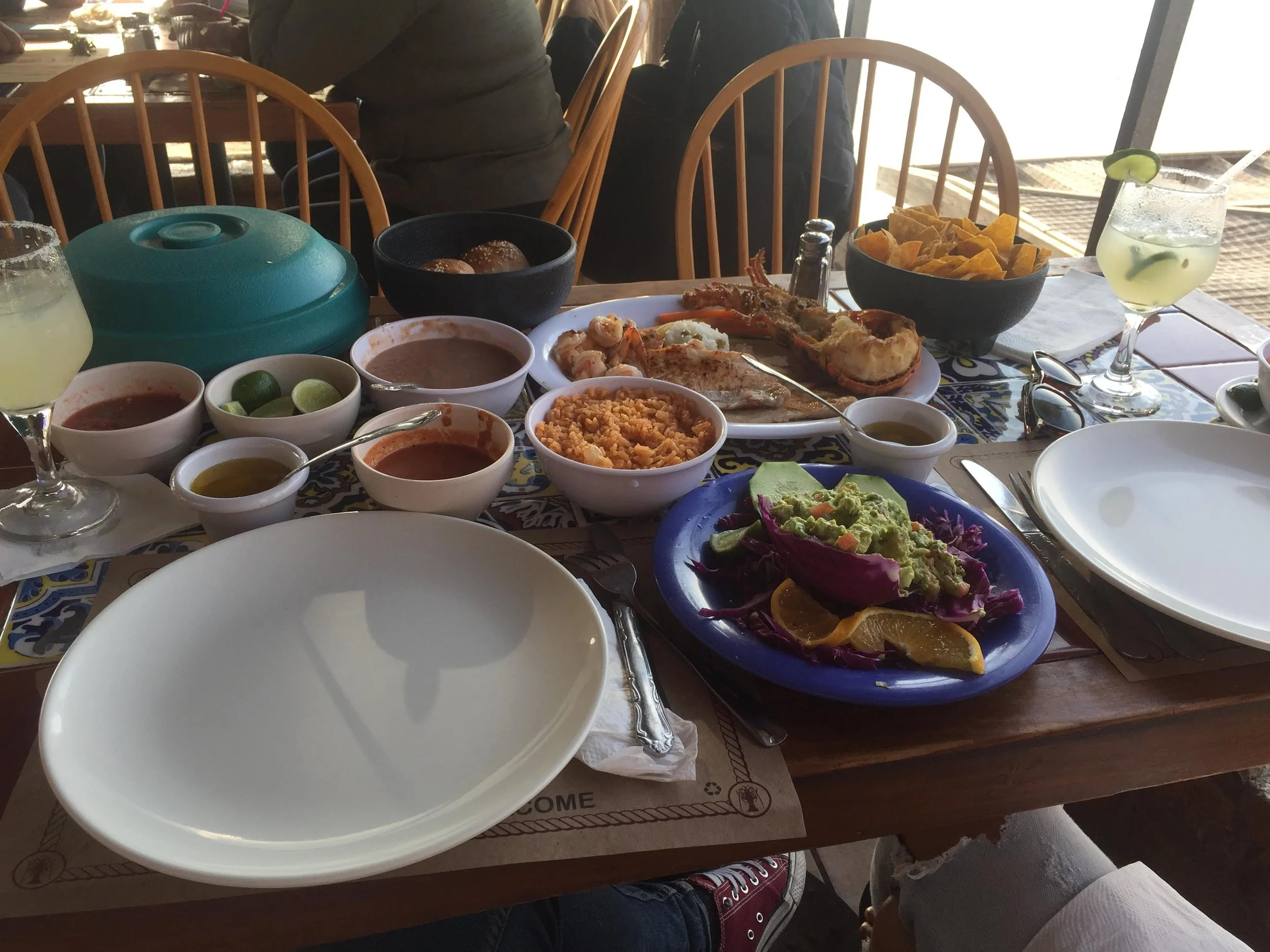
Puerto Nuevo local family restaurant
2. Puerto Nuevo Lobster Village
Location: Puerto Nuevo, Baja California (Carretera Libre KM 44)
Overall Experience: 8/10
Another twenty minutes further south is a tiny fishing village built entirely around one dish: Pacific lobster. This isn’t a resort town or a cruise stop, it’s a real working village where local fishermen supply around thirty family-run restaurants, nearly all of them serving the same thing: whole grilled or fried lobster with warm flour tortillas, Mexican rice, refried beans, fresh salsa, chips, and lime. You pick your family, not your dish.
Here’s what you do: skip the biggest, flashiest places at the entrance of the village and walk further in until you find a smaller spot with ocean views and grandmas in the kitchen. Order one whole lobster each, get a couple of margaritas, and don’t be shy about ordering extra guacamole. Tear a tortilla, pile on lobster, rice, a spoonful of beans, a spoon of salsa, squeeze of lime. Eat with your hands.
Your whole meal was caught by someone who lives a few blocks away and cooked by someone whose grandmother started this business. Plan on at least two hours — this is not a meal to rush. It’s also one of the most direct ways to support a local economy we can think of: cash, to a family, for food they made from a catch they brought in themselves.
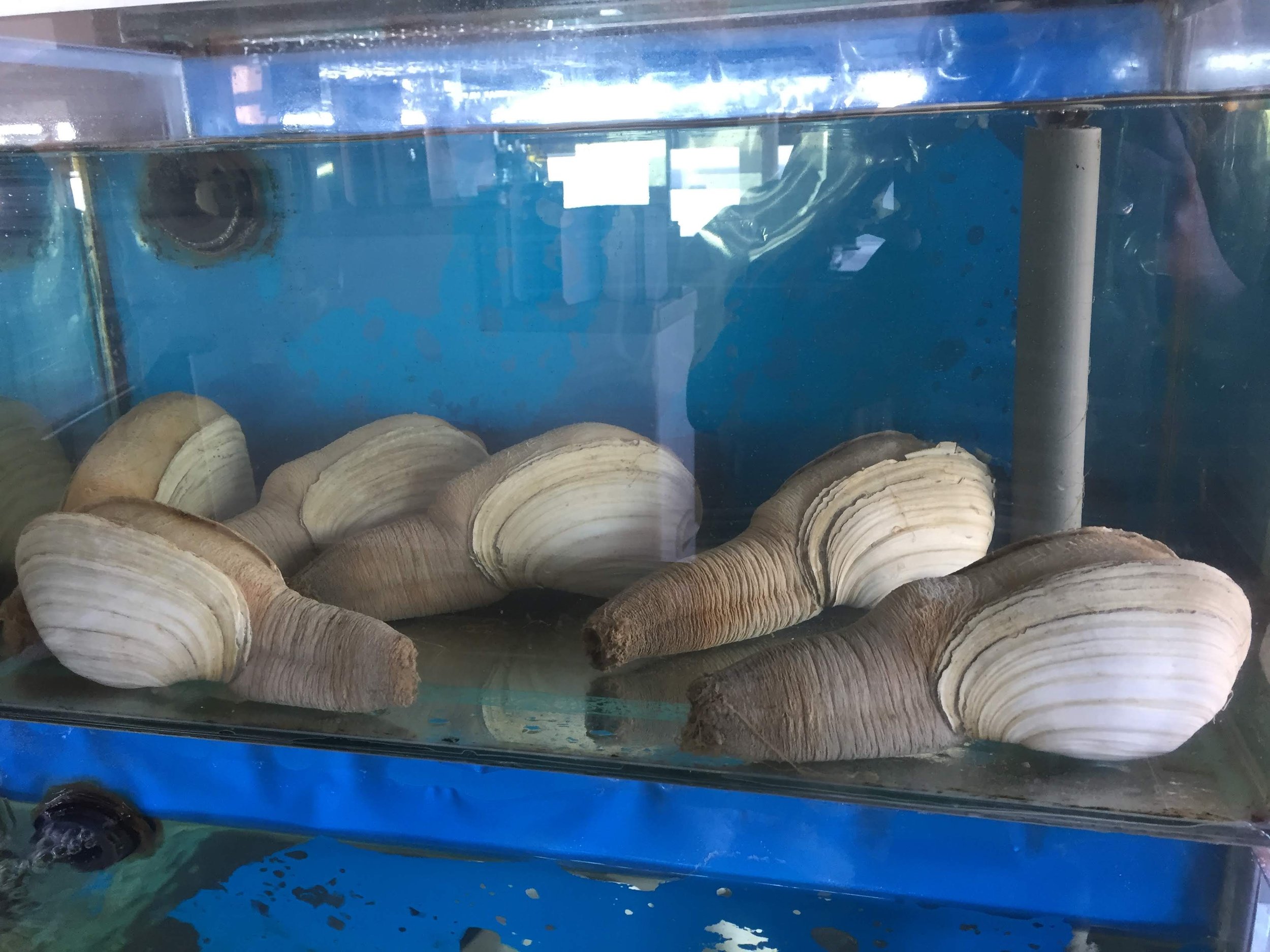
Almeja Generosa at Mercado Negro, Ensenada
3. Mercado Negro & Ensenada Seafood
Location: Mercado Negro, Av. Miramar & Calle 6, Ensenada, Baja California Overall Experience: 10/10
Ensenada has two faces. One is the cruise-port stretch near the waterfront — Hussong’s, souvenir shops, tour operators selling whale-watching boat trips and bay cruises to the ships full of day-trippers. That version of the town we skipped. The other face is a working fishing port where locals shop for dinner, and that’s where we spent our time.
The Mercado Negro is where the day’s catch comes in. We spent a morning wandering the stalls watching fishermen shuck the day’s seafood and got to see our first almeja generosa up close. No boat tour comes close to this for understanding the actual relationship between this town and its ocean — and it costs nothing to walk through.
Around the corner from the market, we sat down for a delicious ceviche of almeja generosa, and if you’ve never had it, it’s worth a stop on its own. Almeja generosa — also called chiluda in Mexico, or "geoduck" in the US — is a large native Pacific clam that lives buried in the seabed off the Baja coast. It looks a little wild: an oversized ridged shell with a long siphon that extends out like an elephant’s trunk (which is exactly what they call it in China). But the meat is mild, sweet, and lightly crunchy, somewhere between a scallop and an abalone. Most of what’s harvested in Baja gets exported to Japan and China at premium prices, which makes eating it right here at the source feel like a small act of staying in place with the food.
The ceviche came in a bright, tart lime broth with cherry tomatoes, crisp radish, cucumber, onion, and plenty of cilantro, with the clam sliced thin and cured just enough to hold its texture. We paired it with a round of micheladas with thick chile-salt rims you had to work for. This is food that doesn’t need much explanation. It’s the Pacific, on a plate, an hour out of the water, served by the people who know it best.
Come hungry, order more than you think you can finish, and pay attention to what the locals are eating — the best dish in the place is rarely the one on the English menu. And if you’re offered a boat tour on your way out of town, our honest advice is to keep walking.
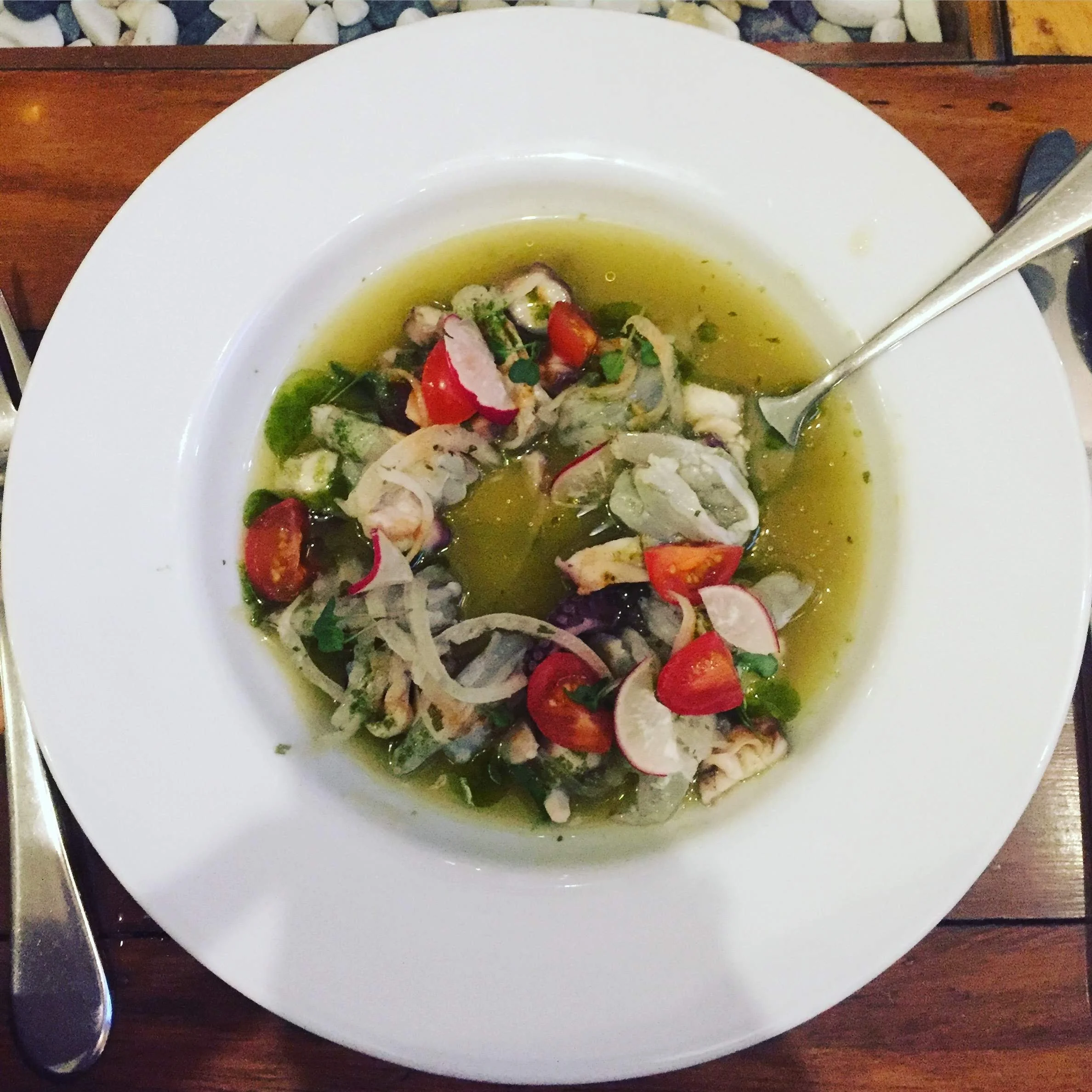
Shrimp Ceviche
4. Valle de Guadalupe Wine Country
Location: Valle de Guadalupe, about an hour northeast of Ensenada
Overall Experience: 9/10
The last leg takes you inland, up into what is, quietly, one of the most interesting wine regions in the Americas. Valle de Guadalupe has been growing wine for centuries — Spanish missionaries planted the first vines here in the 1700s — but what’s happening now is its own thing. A new generation of Mexican winemakers is producing Mediterranean-style wines (Nebbiolo, Tempranillo, Grenache, plenty of creative blends) on farms where the winery, the restaurant, and the kitchen garden are often the same plot of land.
What we love most about the Valle is the scale. There are a few large commercial operations, but the soul of the valley is in the dozens of small, independent, family-run producers — many of them practicing organic or biodynamic farming, most of them making wine in quantities so limited you won’t find their bottles outside Mexico. Skip the big tour-bus wineries and seek out the smaller cellars where you’ll likely be poured by the winemaker themselves.
The food is farm-to-table in the literal sense: your lunch was grown on the other side of the parking lot. The valley is hot, dry, and beautiful in that Northern Baja way — a landscape that looks like parts of Southern California forty years ago, before everything got paved over.
A few practical tips: arrange a local driver rather than joining a packaged wine-bus tour (smaller group, better routes, and the money stays local), book the smaller restaurants ahead (some take weeks), and don’t try to do more than three or four wineries in a day. Come hungry, stay long, drink slow.
